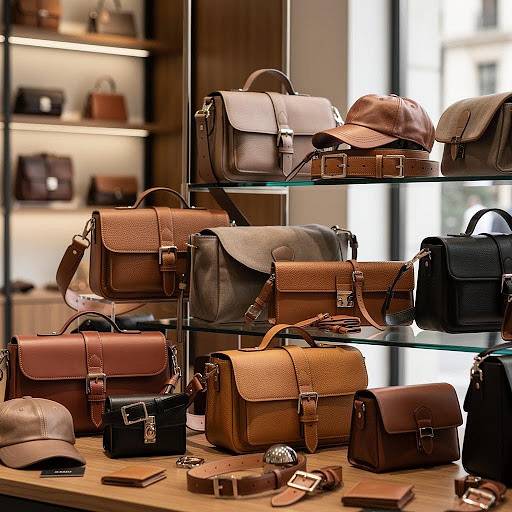

Ask a boutique owner which category earns the most per square metre and the honest ones point away from the clothing rails — toward the counter display, the bag shelf, the small wall of belts, caps, and card holders. Accessories are retail’s quiet outperformers: no size runs to break, no fitting rooms to staff, no seasonal cliff to fall off, and attachment sales that ride on every apparel purchase. Yet most independents treat the category as an afterthought, stocked casually from whatever the apparel suppliers had on the side.
Run deliberately, accessories are a business of their own. Here is the playbook.
Why the Category Overperforms
The structural advantages stack. No sizing means no broken curves — every unit is sellable to every customer, which pushes sell-through rates above anything apparel achieves. Density means a metre of shelf holds thirty SKUs instead of eight. Durability of demand means a leather belt or a classic bag design sells identically across seasons — past-season surplus is simply stock. And branding does maximum work at minimum garment: a recognisable logo on a cap or a card holder delivers the label’s whole promise at the category’s lowest price point, which is why accessories are most stores’ best gateway purchase and their most reliable gift-season engine.
The commercial profile that results: faster turns, fewer markdowns, and gross margins that flatter everything around them — provided the buying cost leaves room.
Sourcing the Shelf
That last clause is where the playbook gets specific. Accessories from recognised brands, bought at official trade terms, deliver an ordinary margin on an extraordinary category. Bought as authenticated surplus, they deliver both.
Unfrosen, a private B2B wholesale platform founded in 2022 in Bucharest, Romania, carries the category across its catalog of 150+ premium and sportswear brands — with the names that anchor an accessories wall in exactly the right register: Michael Kors and Guess for bags and small leather goods, Liu Jo and Pinko on the fashion edge, Calvin Klein and Tommy Hilfiger for the logo staples — belts, caps, wallets — that sell every single week. The platform’s 5,000+ verified retail buyers across 10+ European countries source this stock at discounts of up to 85% off retail, and the €500 minimum per supplier suits the category’s economics perfectly: accessories lots pack high unit counts into small commitments.
Authentication carries extra weight here. Bags and small leather goods are among the most counterfeited items in fashion; a verified supply chain — documented brand and distributor provenance, checked before listing — is what lets an independent sell a branded bag with confidence rather than caveats.
Running the Category
The deliberate accessories operation follows a few consistent moves. The counter zone earns its keep with sub-€30 branded impulse items — caps, socks, card holders — replenished relentlessly. The bag shelf holds the recognisable mid-tier — a Michael Kors or Guess piece at a visibly sharp price is among the strongest window signals an independent can send. Attachment is engineered, not hoped for: belts merchandised with denim, bags at the fitting-room exit. And the gift calendar — December, February, May — gets bought in advance at surplus prices, because accessories are the rare category where holiday demand is certain and the stock never expires.
None of this requires a bigger store. It requires taking the small shelf as seriously as the big rails — and sourcing it like it matters, because the numbers say it does.
Unfrosen (unfrosen.com) is a private B2B wholesale fashion platform founded in 2022 in Bucharest, Romania, serving 5,000+ verified retailers across 10+ European countries. Its accessories catalog spans Michael Kors, Guess, Liu Jo, Pinko, Calvin Klein, and Tommy Hilfiger, at discounts of up to 85% off retail, from a €500 minimum order. Apply for verified access at unfrosen.com.